Glow Maths Hub
Maximising KS3: Powering progress
.jpg)
Building on the foundations of KS2 to help students achieve great outcomes in KS4
“When children step into Year 7, they do so having already completed seven years of learning. As secondary teachers, it’s our job to know what that looks like and to understand that journey”.
The opening words of Secondary MathsFest26 (19 June), from Jenny Cains – GLOW’s Secondary and Post-16 Assistant Maths Hub Lead – emphasising the critical nature of Key Stage 3 (KS3) and how, approached effectively, Years 7 to 9 can be the engine room of maths. Jenny introduced keynote speaker, Tom Manners, a primary and secondary school teacher, passionate about making the most of KS3 - building on the foundations of KS2 and looking forward at KS4, and the GCSE years.
The journey from EYFS to KS4 – and why you need to know it
Tom (pictured above) took delegates on a journey from Early Years to Key Stage 4 – exploring the factors that make Key Stage 3 so important and challenging, in equal measure. Promising delegates some ‘spicy’ (controversial) subject matter, he covered the following topics:
- To set, or not to set! – does setting by ability really drive better outcomes?
- KS4 teachers are better than KS3 teachers - more qualified and/or experienced
- Curriculum aims are the same from EYFS to KS4 - but is our practice the same?
- Being taught something is not the same as learning something
- ‘Getting it’ is more important than getting it right
- Oracy is fundamental – maths talk matters, reasoning is everything
Taking it back to school
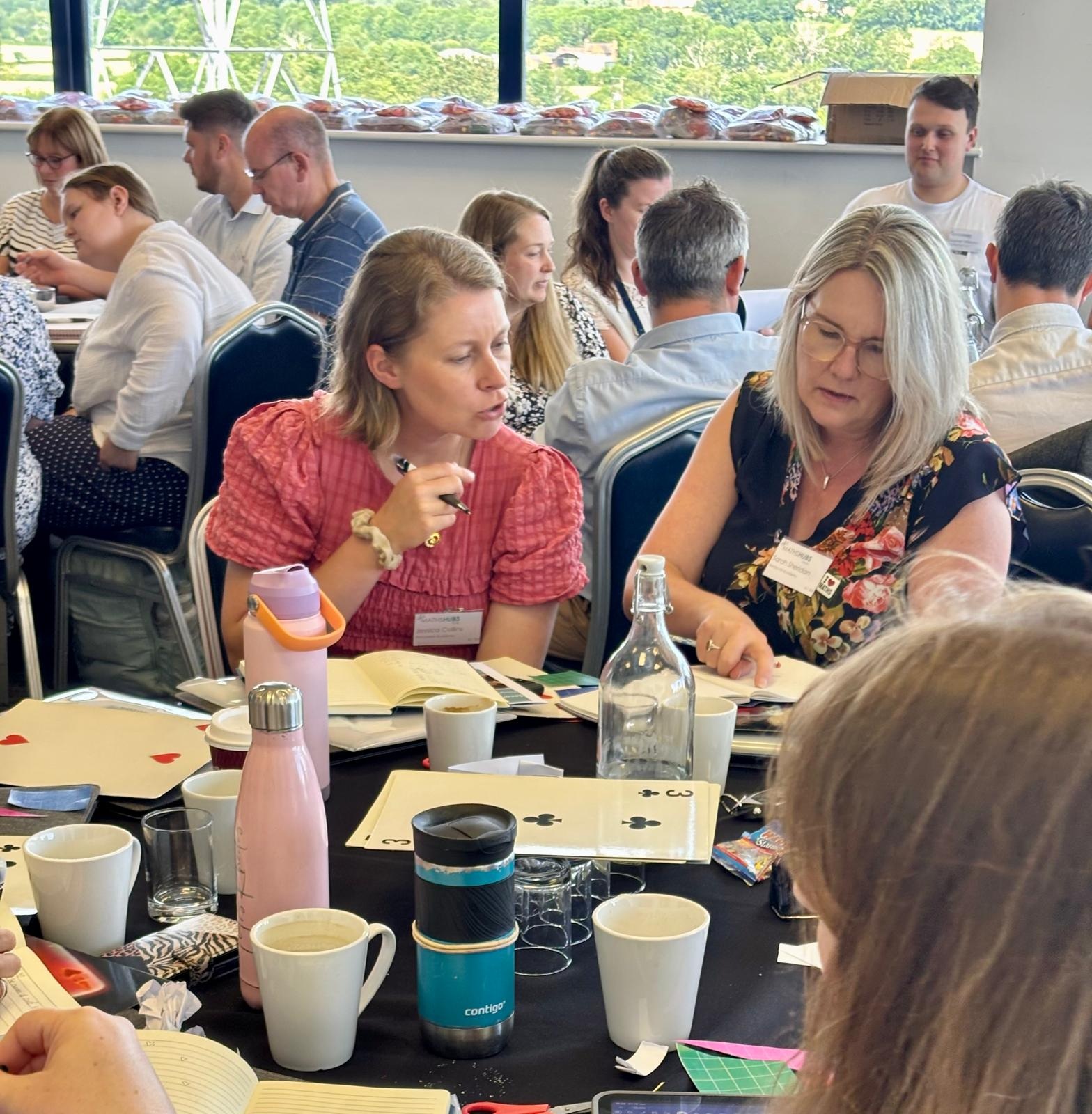 Tom rounded off the discussion by sharing some practical steps to support more effective transitions to Year 7 and start to build a coherent journey through KS3:
- Where did they come from and how did they do it? Get to know more about their current maths and learning experience including lesson structure and teaching methods/ approaches. Focus on some of the larger feeder schools and observe a live maths lesson to help support coherence during their transition
- Don’t be over reliant on SAT scores. Use it to spot trends or themes for a particular cohort but look beyond the SAT scores for the individual. Ask to see examples of pupils’ ‘best work’ – to help build a more accurate picture of their abilities. Focus on things like reasoning skills, explanations and how they explore topics
- Keep change to a minimum. Year 7 lessons shouldn’t be wildly different from Year 6 lessons – consider how you can mirror elements of the teaching approaches from the primary setting to enable a smoother transition from KS2 to KS3
- Build your KS1 & KS2 pedagogical knowledge. Identify who, within your maths department, will lead on KS1 and KS2 content and pedagogy. Read a SATs paper!
Securing Foundations in Year 7: Firing up the KS3 engine room
S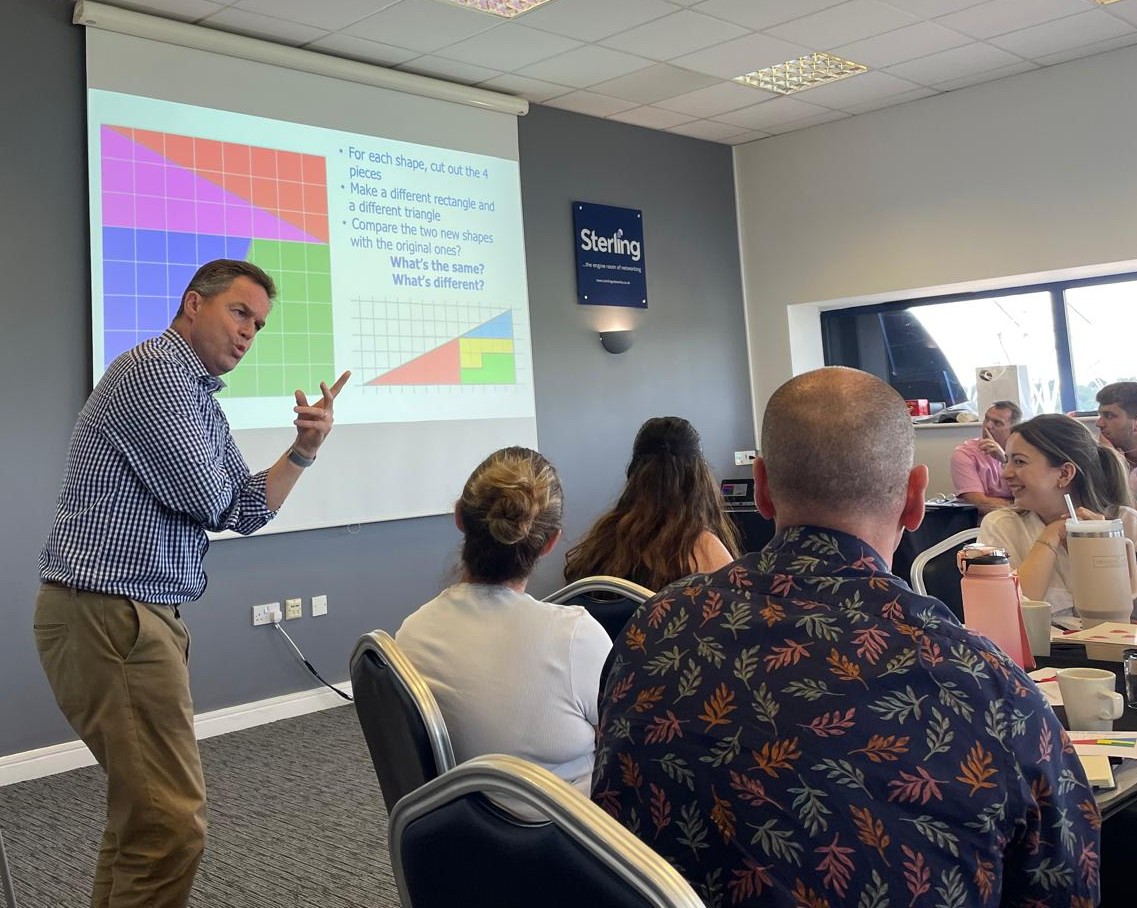 teve Lomax (pictured right), GLOW’s Senior Leadership Link (SLL), addressed the room, to explore the importance of securing foundations at Year 7 and define what knowledge and skills need to be in place for those pupils transitioning from primary to high school. With a national average of 74% of children achieving age-related expectations (based on SATs results) in Year 6, this means 26% could be starting secondary below ARE. How do we bridge the attainment gap? How do we support these pupils to have the best start to KS3? Steve shared GLOW Maths Hub’s ‘Securing Foundations at Year 7’ programme, which has been specifically designed for Year 7 teachers, to enable them to build their knowledge of KS1 and KS2 content and better support these students.
Workshops and working together
For the remainder of the day, delegates were able to take part in a series of workshop sessions led by members of the GLOW team on topics including Mathematical Thinking, Representations/Manipulatives, and Proportion.
9 out of 10. Would recommend!
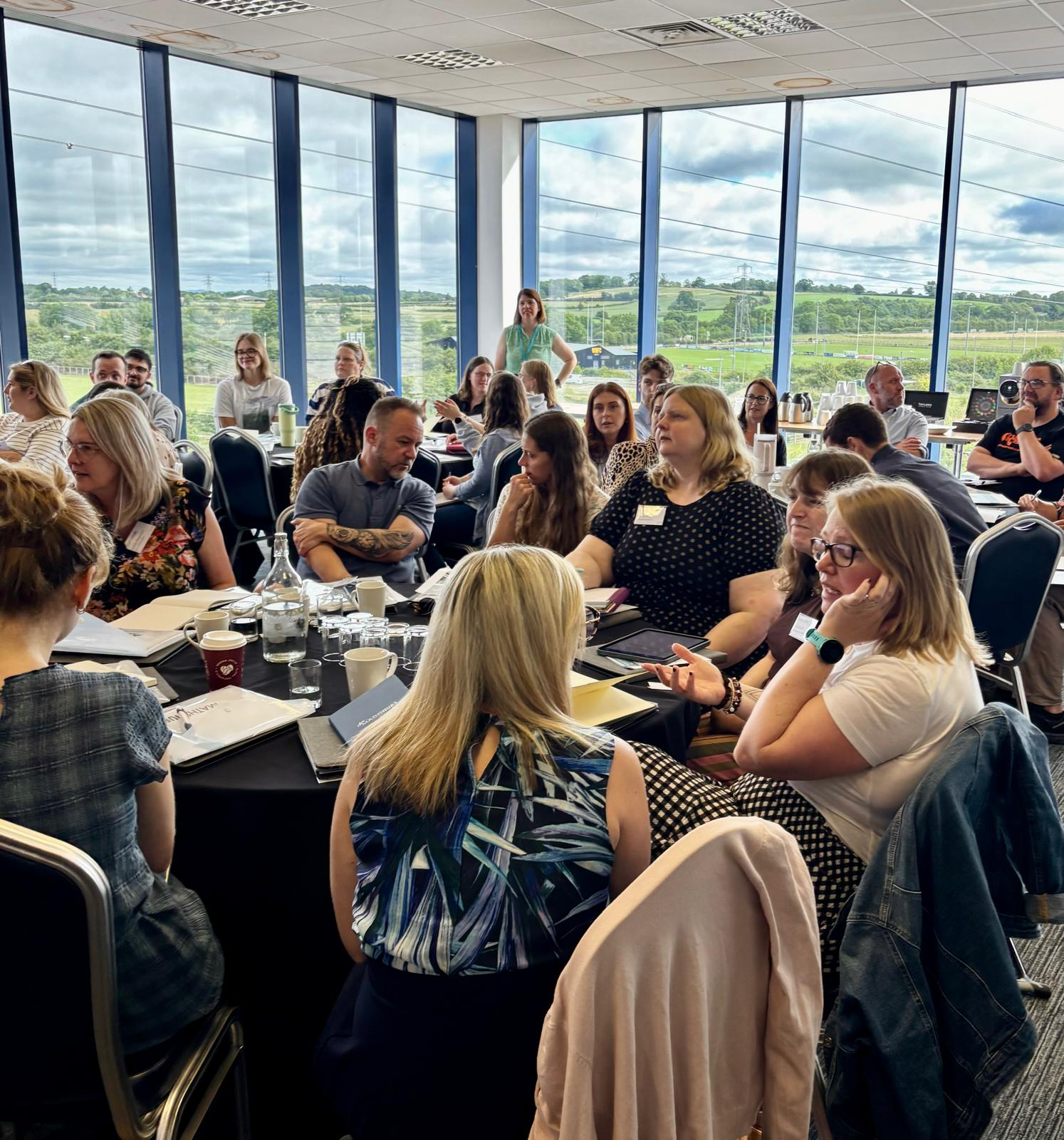 With over 50 delegates, from 40 secondary schools across the GLOW region, the event was a runaway success. When asked to rate the event on a score of 1 to 10 (where 10 is high/excellent), the average score from delegates was 9.07.
“It was inspiring to listen to the keynote speakers, I genuinely feel refreshed to go to work on Monday. The workshops gave us solid ideas to implement in the department and in my own classroom. Honestly brilliant”.
“I really enjoyed being able to talk to other maths teachers. It isn't something I get the chance to do very often and find it really useful for bouncing ideas off each other and having discussions about our subject.”
More about MathsFest
Each year, we hold two celebrations of maths – inviting our biggest fans, maths teachers from across Gloucestershire and Worcestershire, to join us for a day of insights and learning. Primary MathsFest is held in February, and Secondary MathsFest in June/July. The purpose of these events is to offer free CPD to maths teachers, and provide the opportunity for participants to meet other maths teachers - to share ideas, exchange practice and celebrate their love of maths.